Why Your Toilet Keeps Running
That constant trickle from the loo traces back to one of three worn parts inside the cistern, and each leaves its own clue. A toilet keeps running until the failed part is replaced, so the job is working out which one has let go. We sort these faults on the Toowong run every week, from old Queenslanders to the apartments above the station.
If we're late, $100 comes off your bill

- Licensed and InsuredEvery job done by a licensed plumber. QBCC No: 15024607
- Fixed Quote FirstFlat-rate pricing, agreed before any work starts
- Lifetime Labour WarrantyBacked by our Fix-It-or-It's-Free guarantee (T&Cs apply)
- $0 Call-Out FeesNo extra charge for nights, weekends or public holidays
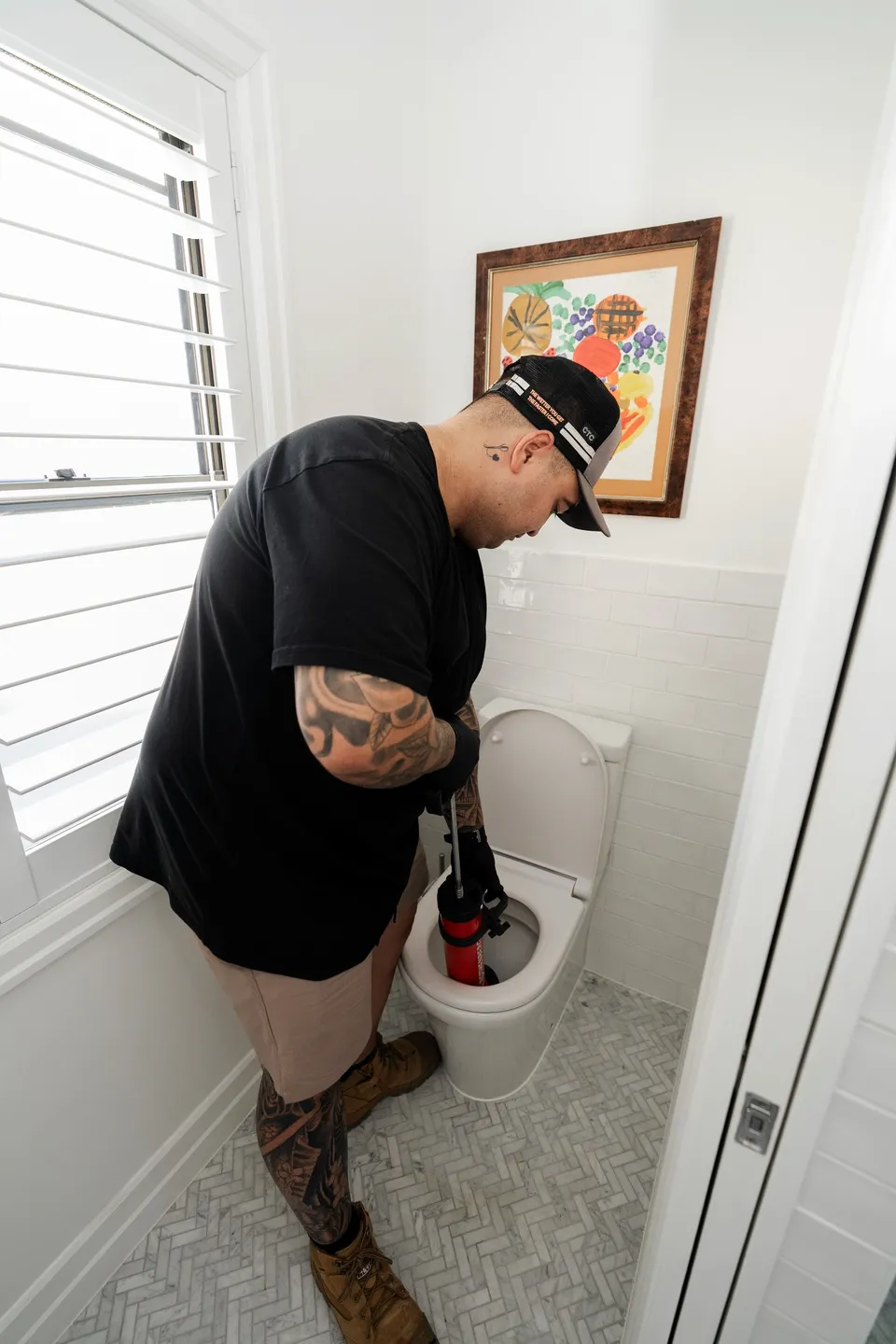
Inlet Valve, Flush Valve Seal and Overflow Explained
Three parts cause the noise: an inlet valve that fails to shut off, a flush valve whose seal leaks water into the pan, and a water level high enough to escape down the overflow.
The inlet valve refills the cistern after each flush and closes when the float rises to its marked level. Wear or grit inside it stops the valve shutting, so you hear a hiss or trickle that continues well after the cistern is full.
The flush valve, also known as the outlet valve, holds the stored water between flushes. When its rubber seal wears, water slips past into the pan, the level drops a touch, and the inlet valve refills it. The giveaway is the cistern topping itself up every few minutes though nobody has pressed the button.
The overflow is the built-in escape route that carries surplus water out of the cistern instead of onto the floor. If the float is set too high or the inlet valve never closes, water runs out through the overflow, sometimes showing up as a drip from a pipe outside the house.

When the Cistern Will Not Fill
A cistern that stays empty usually comes down to an inlet valve clogged or worn out, a float riding lower than it should, or a stop tap nobody opened fully.
Rule out the stop tap first, because a tap nudged half shut takes a second to fix. A float riding low also starves the flush, since the valve closes before enough water has entered.
One version of the fault sounds odder. If water keeps running while the level stays put, the flush valve's seal may be draining the cistern as fast as the supply fills it. The cistern sounds busy yet never fills, and the flush that follows is weak.
What Colour in the Bowl Tells You
Add a little food colouring to the cistern, hold off on flushing, and wait.
Colour turning up in the bowl means the cistern is leaking into the pan by itself. Flush when you're done; the dye won't mark a ceramic bowl.
No colour means the flush valve is doing its job, and the inlet valve and water level become the next suspects.
No dye at home? Rest some dry toilet paper against the rear of the bowl, just above the water. Paper that stays dry means no trickle; paper that goes damp means water is creeping down the inside of the bowl, which points to a worn seal.
Which Cistern Parts a Home Owner May Replace
The QBCC lists three cistern rubbers as work anyone with the right knowledge and skill may do: a float-valve washer, a drop-valve washer and a suction-cup rubber. No licence, approval or report is needed, and the finished job must still meet the standards that apply.
Everything else inside a toilet is minor work for a QBCC licensee, with no permit needed and no Form 4. The licence is not optional.
For a rental, Queensland's tenancy rules place repair duties on the owner or manager, and the tenant should speak up the moment a fault appears. Repairs the Act does not class as emergencies count as routine, and a routine repair happens within a reasonable time.
The emergency list covers a loo that is blocked or broken. A cistern that runs non-stop is not named on it.

Who Pays for Water a Cistern Wastes
No, Urban Utilities' concealed leak adjustment leaves out water a cistern wastes, along with dripping taps, hot water systems and other water appliances.
The owner of the property carries primary responsibility for leaks and the losses they cause. Most Toowong households rent, so a quietly trickling cistern can land on either side of a share house's water bill, and no refund follows either way.
When to Call a Plumber
Call once the dye test points to the seal, or the inlet valve refuses to stop filling, or the level simply never rises. Anything beyond the three unregulated rubbers, including the inlet valve itself, the flush valve assembly and any cistern internals, is licensed work.
From the Queenslanders climbing past Toowong Cemetery to the towers beside the station, cisterns here range from decades old to brand new, and both ends reward a plumber who carries the parts. The full range of loo faults, from base leaks to cracked porcelain, sits on our toilet repairs page.
Toilet Questions From Toowong
Call (07) 3524 7137Why does my toilet keep running after I flush?
Usually the inlet valve is failing to close, or the flush valve's rubber seal is seeping water into the pan, so the cistern keeps refilling. A third cause is a water level sitting above the overflow. A hiss suggests the inlet valve; a cistern that quietly refills itself suggests the seal.
Will food colouring stain my toilet bowl?
No, food colouring won't mark ceramic, and a flush at the end of the test washes every trace away.
Can I fix a running toilet myself in Toowong?
Yes, but only within the QBCC's three unregulated cistern parts: the drop-valve washer, the float-valve washer and the suction-cup rubber. The result must still meet the standards that apply. Every other toilet repair belongs with a licensed plumber.
What does it cost to fix a running toilet in Toowong?
The biggest drivers are which part has failed and how easily we can reach the cistern and its stop tap. Your price is set by a fixed quote before any work starts, so nothing moves after you agree to it.

Ring Us About the CisternWe'll call you back.
Call (07) 3524 7137 to book a plumber in Toowong. We're available 24/7, with $0 call-out fees, flat-rate pricing and same-day where we can.
To claim your $0 call-out fee, call (07) 3524 7137 today.